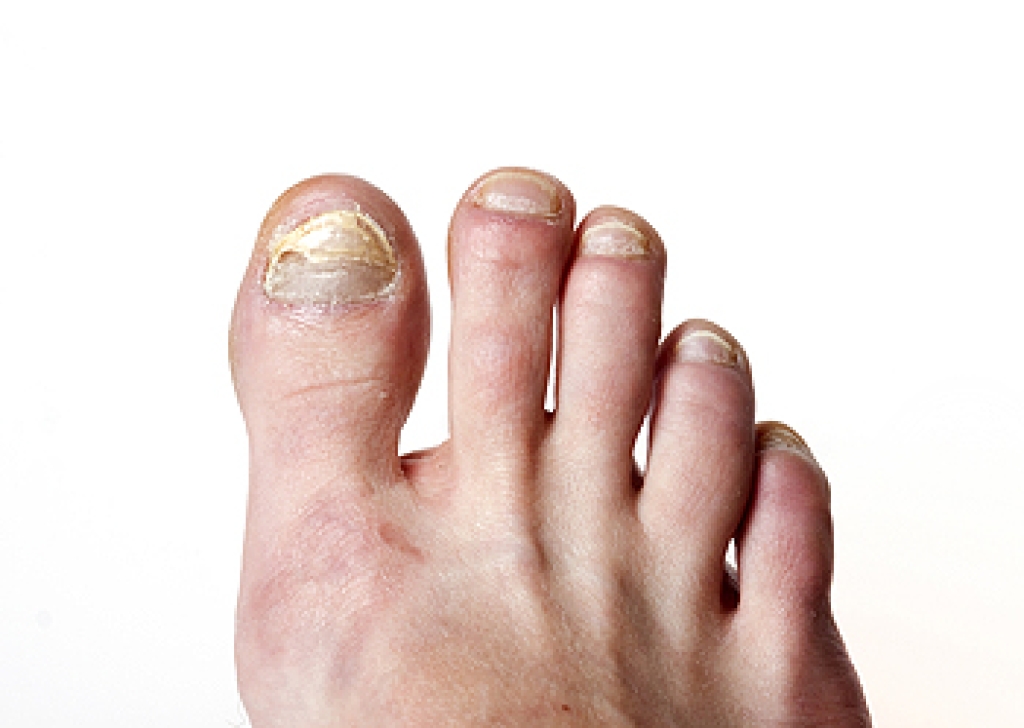
Toenail fungus, known as onychomycosis, affects the toenails. It develops when fungi enter through cracks in the nail or skin. Infection can cause nails to become thick, brittle, discolored, or misshapen. Affected nails may appear yellow, white, or brown and sometimes develop an odor. As the infection progresses, pain or tenderness may develop, especially when shoes place pressure on the toe. Thickened nails can become difficult to cut and maintain.
Several factors can increase the risk of developing toenail fungus. Warm, damp environments create conditions where fungi thrive. Sweaty feet and wearing closed shoes can increase moisture around the nails. Walking barefoot in shared showers, gyms, or locker rooms can increase exposure. Previous toenail injuries may provide an opening for infection. Poor circulation and certain chronic health conditions can increase vulnerability. Keeping feet clean and dry can help lower the risk.
A podiatrist can diagnose toenail fungus by examining the affected nail and skin while reviewing your symptoms and history. In some cases, a small nail clipping or scraping is sent for laboratory testing to confirm the infection and identify the fungus. Treatment depends on the severity and type of infection. Options may include professional nail trimming or thinning, prescription antifungal medication, or laser therapy. Because toenails grow slowly, recovery requires patience and consistent treatment.
Early evaluation can help prevent toenail fungus from becoming more severe or difficult to manage. If you notice changes in nail color, thickness, or shape, a podiatrist can determine whether fungus is responsible or whether another condition is causing the changes. Podiatric care can provide an accurate diagnosis, appropriate treatment, and ongoing monitoring as healthy nail growth occurs. If you have symptoms of toenail fungus, it is suggested that you consult a podiatrist for evaluation and treatment.
For more information about treatment, contact Richard M. Allen, DPM of Idaho. our doctor can provide the care you need to keep you pain-free and on your feet.
Toenail Fungus Treatment
Toenail fungus is a condition that affects many people and can be especially hard to get rid of. Fortunately, there are several methods to go about treating and avoiding it.
Antifungals & Deterrence
Oral antifungal medicine has been shown to be effective in many cases. It is important to consult with a podiatrist to determine the proper regiment for you, or potentially explore other options.
Applying foot powder on the feet and shoes helps keep the feet free of moisture and sweat.
Sandals or open toed shoes – Wearing these will allow air movement and help keep feet dry. They also expose your feet to light, which fungus cannot tolerate. Socks with moisture wicking material also help as well.
If you have any questions please contact our office located in Lewiston, ID . We offer the newest diagnostic and treatment technologies for all your foot and ankle needs.
