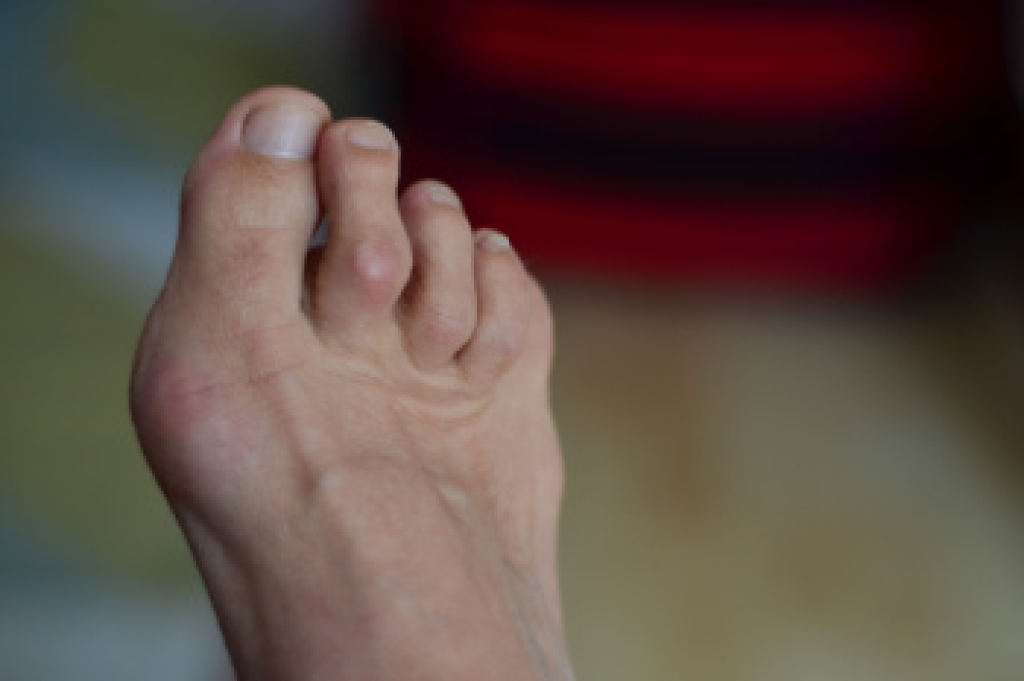
A hammertoe is a toe that bends downward at the middle joint instead of lying flat. This change in position most often affects the second toe, although it can develop in other toes as well. At first, the toe may still move freely, but it can become more rigid as the condition progresses. The abnormal bend can create pressure inside a shoe and cause pain while walking. Corns and calluses sometimes develop where the toe rubs against the shoe. A podiatrist can evaluate the shape of the toe, identify the cause of the deformity, and recommend treatment that improves comfort and function.
Several factors can contribute to a hammertoe. Muscle and tendon imbalance is one of the leading causes because it changes how the toe moves. Tendons are strong bands of tissue that connect muscles to bones and help control movement. Arthritis, previous injuries, and shoes that lack proper support can also increase the risk. Shoes that fit too tightly around the toes can place added pressure on the joints and make the deformity worse. A podiatrist performs a physical examination and checks how well the toe moves. X-rays help evaluate the position of the bones and determine how advanced the deformity has become.
Treatment depends on the severity of the hammertoe and how much it affects daily activities. A podiatrist can recommend custom orthotics to improve foot alignment and reduce pressure on the affected toe. Other treatment options include padding and splints to improve flexibility and support better movement. Prescription medications can also help reduce pain and inflammation. When the toe becomes stiff or other treatments do not provide enough relief, surgery can straighten the toe and improve function. Early treatment helps prevent the deformity from becoming more severe and supports healthier movement. If you have symptoms of hammertoe, it is suggested that you schedule an appointment with a podiatrist for a diagnosis and appropriate treatment.
Hammertoe
Hammertoes can be a painful condition to live with. For more information, contact Richard M. Allen, DPM from Idaho. our doctor will answer any of your foot- and ankle-related questions.
Hammertoe is a foot deformity that affects the joints of the second, third, fourth, or fifth toes of your feet. It is a painful foot condition in which these toes curl and arch up, which can often lead to pain when wearing footwear.
Symptoms
- Pain in the affected toes
- Development of corns or calluses due to friction
- Inflammation
- Redness
- Contracture of the toes
Causes
Genetics – People who are genetically predisposed to hammertoe are often more susceptible
Arthritis – Because arthritis affects the joints in your toes, further deformities stemming from arthritis can occur
Trauma – Direct trauma to the toes could potentially lead to hammertoe
Ill-fitting shoes – Undue pressure on the front of the toes from ill-fitting shoes can potentially lead to the development of hammertoe
Treatment
Orthotics – Custom made inserts can be used to help relieve pressure placed on the toes and therefore relieve some of the pain associated with it
Medications – Oral medications such as anti-inflammatories or NSAIDs could be used to treat the pain and inflammation hammertoes causes. Injections of corticosteroids are also sometimes used
Surgery – In more severe cases where the hammertoes have become more rigid, foot surgery is a potential option
If you have any questions, please feel free to contact our office located in Lewiston, ID . We offer the newest diagnostic and treatment technologies for all your foot care needs.
