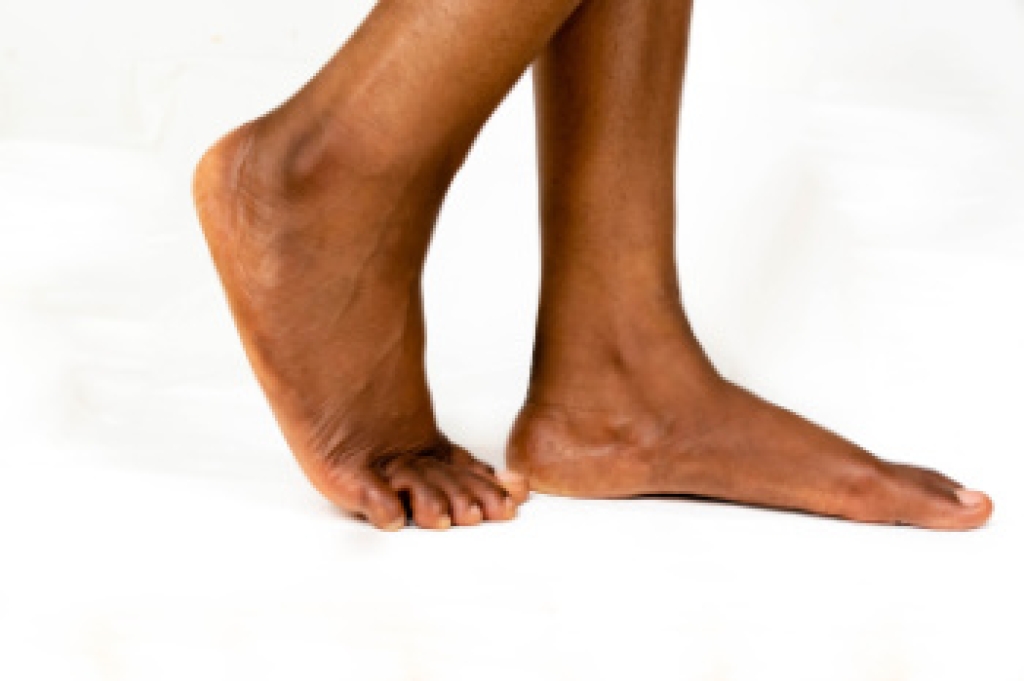
Flat feet, called fallen arches, describe a foot structure where the medial arch is low or absent, allowing much of the sole to contact the ground. There are several types of flat feet, including flexible flat feet, the most common form. In this type, an arch may appear when the foot is not bearing weight but flattens during standing or walking. Rigid flat feet, which are less common, occur when an arch does not form at any time. This is often due to bone structure. Another type is acquired adult flatfoot, which develops later in life after normal arches were present. Flat feet can be linked to neurological conditions, inflammatory joint disease, or prior injury. A podiatrist can evaluate foot structure, assess gait, and determine treatment, including custom orthotics. For help with foot pain caused by flat feet, it is suggested that you make an appointment with a podiatrist for an exam, diagnosis, and treatment.
Flatfoot is a condition many people suffer from. If you have flat feet, contact Richard M. Allen, DPM from Idaho. our doctor will treat your foot and ankle needs.
What Are Flat Feet?
Flatfoot is a condition in which the arch of the foot is depressed and the sole of the foot is almost completely in contact with the ground. About 20-30% of the population generally has flat feet because their arches never formed during growth.
Conditions & Problems:
Having flat feet makes it difficult to run or walk because of the stress placed on the ankles.
Alignment – The general alignment of your legs can be disrupted, because the ankles move inward which can cause major discomfort.
Knees – If you have complications with your knees, flat feet can be a contributor to arthritis in that area.
Symptoms
- Pain around the heel or arch area
- Trouble standing on the tip toe
- Swelling around the inside of the ankle
- Flat look to one or both feet
- Having your shoes feel uneven when worn
Treatment
If you are experiencing pain and stress on the foot you may weaken the posterior tibial tendon, which runs around the inside of the ankle.
If you have any questions, please feel free to contact our office located in Lewiston, ID . We offer the newest diagnostic and treatment technologies for all your foot care needs.
